Tretinoin is one of the most talked-about ingredients in skincare right now, but using it correctly matters as much as using it at all. Glamour asked board-certified dermatologists to break down how to apply tretinoin properly, how to minimise irritation, and what to expect from the process.
Tretinoin is a prescription-only retinoid (a vitamin-A derivative) used to treat acne, fine lines, uneven skin texture and dark spots. It is stronger than over-the-counter retinol and is not available without a prescription. As a September 2026 guide published by Skin by Science notes, a medical assessment is required, and the treatment can be accessed via the NHS, a private face-to-face clinic or a suitably regulated online prescribing service.
Start low and slow
‘Tretinoin is one of the most effective tools in dermatology for treating acne, fading dark spots, improving skin texture, and increasing collagen production in the skin,’ says Dr Aderonke Obayomi, a board-certified dermatologist and assistant professor at Mount Sinai. Her core advice for beginners is straightforward: ‘Begin with the lowest concentration a few nights a week and apply to cleansed and completely dry skin.’
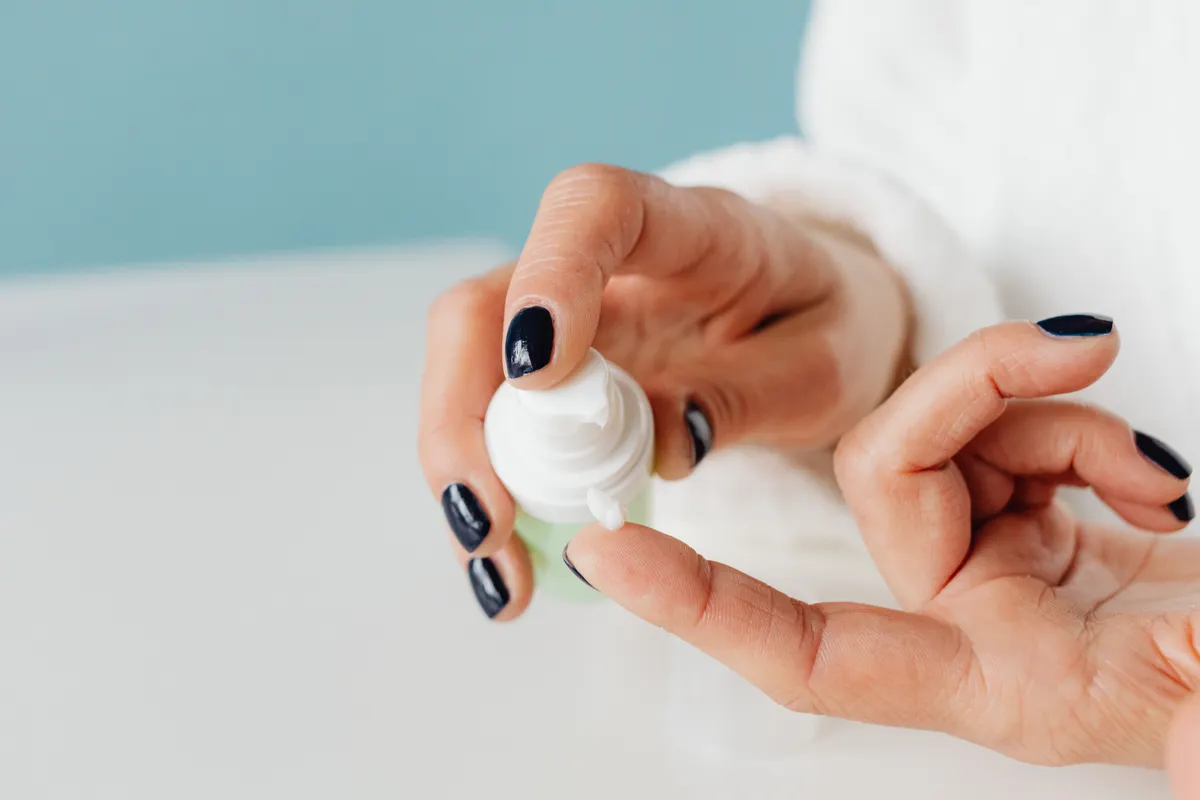
The quantity matters too. Dr Obayomi recommends no more than a pea-size amount for the whole face, specifically, the amount that sits on the tip of your index finger. Dot it around your face first, then massage it in until fully absorbed. She adds that extra care is needed around sensitive areas: ‘You should also be careful around sensitive areas like the corner of the eyes and corner of lips.’
Dr Shari Marchbein, another board-certified dermatologist, explains the mechanism behind the ingredient. ‘Retinoids work by increasing collagen production as well as increasing the rate of skin cell turnover,’ she says. ‘They also help treat acne, blackheads, and clogged pores by reducing the stickiness of the cells that clog pores, as well as speeding up the rate at which the skin turns over and regenerates.’
The sandwich method and what to expect
If irritation is a concern, Dr Obayomi points to the sandwich method as a practical solution. The idea is to layer tretinoin between two applications of moisturiser, acting as a buffer on either side. ‘First place a gentle moisturiser or petroleum jelly on your face as a barrier, then the tretinoin, followed by the moisturiser or petroleum on top,’ she says. ‘This will help to minimise irritation.’ Leave enough time between each layer for it to absorb before applying the next, and choose a moisturiser free from potent actives such as retinol or vitamin C, ingredients with ceramides, peptides, squalane or hyaluronic acid are better suited here.
A degree of initial purging is to be expected. ‘When starting tretinoin, it’s also important to remember there is an initial purge phase,’ Dr Obayomi says. ‘Any acne that may be hiding under the surface will come out. Most people see real results in 8 to 12 weeks.‘ The adjustment period can feel discouraging, but the dermatologists’ advice consistently points to patience and consistency.
Sun protection is non-negotiable alongside tretinoin use. ‘Tretinoin can make you more sensitive to the sun,’ Dr Obayomi warns. ‘So, as always, remember that sunscreen of at least SPF 30 should be used every single morning. This is a nonnegotiable.’ Dr Rachel Nazarian, a board-certified dermatologist at Schweiger Dermatology Group, suggests the two-fingers rule as a guide for sunscreen quantity: draw the product along your index and middle fingers, which works out to roughly a twenty-pence-piece amount for the face.
This article originally appeared in American Glamour.
Related Posts